
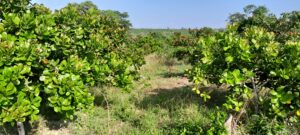
 Every year, cashew nuts from Kenya generate millions of dollars in value across local and international markets. Processors earn. Traders earn. Exporters earn. Consumers enjoy a healthy and premium product. Yet the farmer – the person who plants, nurtures, protects, and harvests the crop – often captures the smallest share of that value.
For many of us who farm cashew nuts in Kenya, the story is painfully familiar. Buyers arrive during harvest season, purchase our raw nuts at very low prices, and disappear until the next season. In between harvests, we are left to manage through the challenges associated with production including pests, climate challenges impacts, and household needs with little support and few opportunities to benefit from the growing demand for cashew products.
The result is a broken value chain. For the last 30 years, the cashew industry has been on a steady decline. Farmers became discouraged. Orchards are now neglected. Old trees are not replaced. Young people, who would input new energy in cashew farming see little future in cashew farming. Productivity has been declining, even as global demand for cashew continues to rise. The latest government statistics indicate that the whole of us, over 60,000 cashew farmers in Kenya produce just above 8,000 metric tons of raw cashew nuts a year!
The big question is – why are farmers leaving cashew growing? It is not because cashew lacks value. The problem is that those who create the value at the farm level capture too little of it. No industry can thrive when its foundation is weakening. Farmers are not just another actor in the value chain but rather the true foundation upon which the entire industry depends. Without profitable and motivated farmers, there will be no sustainable future for processors, traders, exporters, or consumers. And this reality appeared to hit home during the National Cashew Conference at Diani, in April 2026. For the first time, I witnessed a general consensus building that the weakest link within Kenya’s cashew sector is at the farm. Good, but not enough – because what followed was a big commintment to enhance extension services, improvement of varieties and the usual subsidy seedlings for cashew farmers. The reality of the matter is that no one really asked the farmers the real reason why they are not investing in more production even with the aggressive efforts by government to “help’ them.
This is where everyone missed the point – that cashew farming at present is not profitable for the regular farmer and that no one has addressed the real need of the farmers. The real problem with farmers is a skewed cashew value-sharing mechanism, supported by lack of farmer protection mechanisms. Farmers produce the crop, but sell at lower than cost prices and remain behind struggling to even feed their families as they watch middlemen and other get rich from their very own harvest.
It is from these farming experiences that made me stsrt MKOROSHONI, through which I seek to reconnect cashew-growing communities to the true value of their crop through engagement in value addition and marketing.
MKOROSHONI has one simple belief: cashew farming must first become a viably rewarding enterprise for the farmer before anything else stands. We are working with various stakeholders to strengthen farmer participation, improve productivity, expand market opportunities, promote value addition, and advocate for systems that ensure farmers receive a fairer share of the wealth they generate by producing cashew nuts.
Because the future of the cashew industry will not be secured in processing factories or trading centers alone. It will be secured in the farms, communities, and livelihoods of the farmers who make the industry possible.